
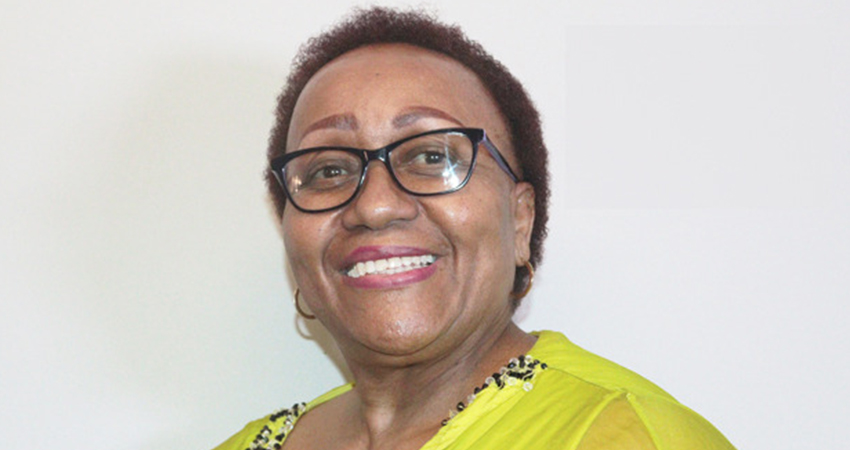
A Personal Reflection by Cynthia “Bushy” Chishimba (née Phoko)
A Message to the Youth of Today
I hope that my story and reflection will inspire the youth of today to appreciate the sacrifices made by previous generations and to recognise the power they hold to shape the future of our nation.
Growing Up in Rockville, Soweto.
My name is Cynthia “Bushy” Chishimba (née Phoko), and these are my personal memories of the June 16, 1976 Soweto Uprising.
I was born and raised in Rockville Township, Soweto, and although I was still a young primary school learner at the time, the events of that historic day and the months that followed remain as clear in my mind today as if they happened yesterday.
In our street lived a gentleman whom we all affectionately called Abuti Selby. In the weeks leading up to the uprising, I often saw groups of people gathering at his house or coming to fetch him.
As a child, I never understood what was happening. It was only years later that I realised those meetings were part of the planning for what would become one of the most significant moments in South Africa’s liberation struggle.
The Morning That Changed Everything
At the time, I was attending Tirisano Primary School, under the leadership of Principal Ramphele.
On the morning of 16 June 1976, we arrived at school expecting an ordinary day.
After morning prayers during assembly, an unfamiliar man addressed us and instructed us to immediately join a student march.
Looking back, I now understand that informing us only on that morning was a strategic decision. Had the police known in advance, the march would almost certainly have been stopped before it even began.
Holding hands, we left our classrooms and walked towards Morris Isaacson Secondary School, where Tsietsi Mashinini and other student leaders were waiting.
They emerged chanting: “Down with Afrikaans!”
Their voices echoed through the streets as they sang freedom songs and inspired thousands of students to join the march.
The Streets Filled With Hope
As we walked towards Orlando West, students from schools across Soweto poured into the streets.
There was an overwhelming feeling of unity, courage, and determination.
Young people who had never met before marched together as one.
When Hope Turned Into Tragedy
Everything changed when we reached Vilakazi Street.
Police confronted us using loudhailers and ordered us to disperse.
Ironically, their threats only strengthened our resolve. We sang louder and chanted freedom slogans with even greater passion.
Then came the violence.
First, tear gas.
Then rubber bullets.
Then live ammunition.
One of those bullets struck Hector Pieterson.
I will never forget seeing him being carried by a gentleman while another student ran beside them. That heartbreaking image would later become one of the defining symbols of the struggle against apartheid.
Panic erupted instantly.
Students scattered in every direction, running for their lives.
Holding On to My Friend
Fortunately, I was still holding tightly onto my friend, Ophilia.
We were just children.
Our parents had no idea where we were, and in those days there were no cellphones to contact anyone.
Fear quickly took over.
Police vehicles patrolled the streets while angry youth began looting shops and bottle stores.
Every time we spotted one of the yellow police vans—commonly known as “Mellow Yellows”—we immediately looked for somewhere to hide.
😂 A Hilarious Moment Amid the Chaos
Despite the terror surrounding us, one memory still makes me laugh today.
In White City Jabavu, an elderly woman kindly agreed to hide us inside her house.
My dear friend Ophilia was so incredibly thin that her knees kept knocking against the door!
I remember whispering repeatedly: “Ophilia… stop moving… your knees are making noise!”
We were terrified that the police would hear the knocking and discover where we were hiding.
Looking back today, it was a truly hilarious moment in the middle of one of the most frightening days of our lives.
The Long Walk Home
As darkness finally fell and everything quietened down, we carefully made our way home using back routes.
Step by step, hiding whenever necessary, we eventually reached our families safely.
The Nightmare Continued
Sadly, June 16 was only the beginning.
Schools remained closed for long periods.
Random police raids on our homes became a regular occurrence as security forces searched for student leaders and activists believed to have organised the uprising.
Community rallies increased, many addressed by Mama Winnie Mandela and Bishop Desmond Tutu.
Churches became places of refuge, comfort, organisation, and hope.
Boycotts of shops in town became common, and almost every day we heard reports that someone had been arrested, detained without trial, or had fled the country into exile.
For many of us, going an entire year without formal schooling became the norm.
Determined not to let my education come to an end, I eventually made the difficult decision to leave South Africa and continue my schooling in Lesotho.
My Reflection
The June 16 Uprising was about far more than Afrikaans as a medium of instruction.
It was a courageous stand against injustice and oppression by fearless young people who believed that freedom was worth fighting for.
Although I experienced those events through the eyes of a child, they shaped the person I became and strengthened my lifelong commitment to justice, education, leadership, and community development.
My Message to the Youth of Today
Never underestimate the power of your voice.
Value your education.
Protect our democracy.
Stand for what is right.
And always remember that the freedoms we enjoy today were won through the courage and sacrifice of young people not much older than yourselves.
May the legacy of June 16, 1976 continue to inspire generations to build a South Africa founded on justice, dignity, equality, and hope.
Aluta Continua!